

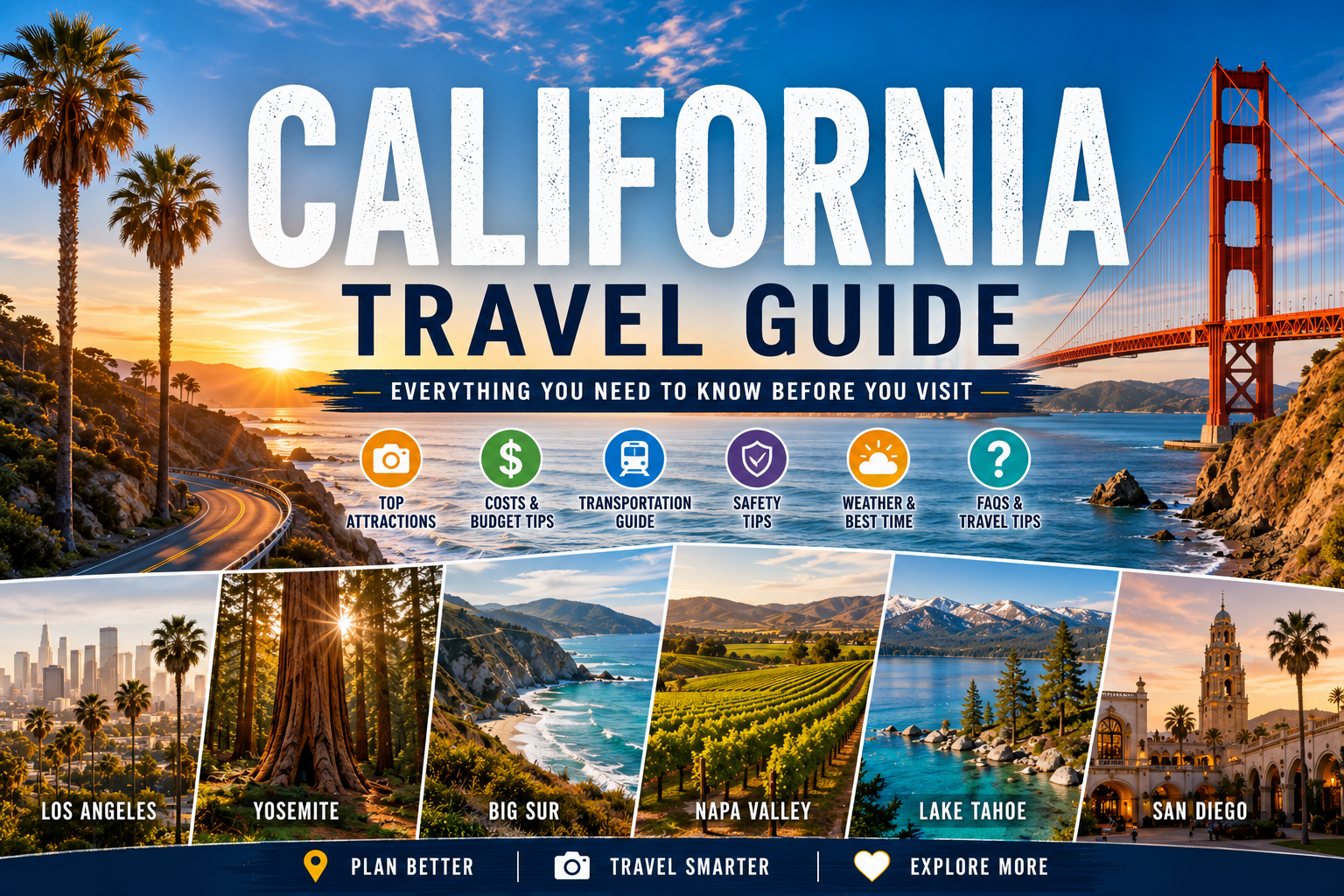
California is unlike anywhere else on Earth. In a single state, you can stand on a Pacific beach at sunrise, drive through ancient redwood forests, summit a 14,000-foot peak, wander through a sun-scorched desert, and end your day with a glass of wine in a vineyard all without crossing a state line. It is the most visited state in the United States for a reason, and yet millions of travelers still barely scratch the surface of what it has to offer.
This guide is InfiniteTrek’s first deep-dive into California travel. We’ve put together everything you need to plan a smart, memorable trip whether you’re coming for a long weekend, a road trip through the coast, or an extended adventure into the wilderness. From the best regions to explore and the top attractions you shouldn’t miss, to practical advice on costs, transportation, safety, and weather, this is the only California travel guide you’ll need in 2026.
Let’s hit the road.
Why Visit California?
There are places you visit once and places that stay with you. California is the latter. It is a destination that feels bigger than its geography — a place where the landscape shifts dramatically every few hundred miles, where world-class cities sit alongside empty wilderness, and where the culture, food, and energy of each region feel distinctly their own.
Here are the biggest reasons California belongs on your travel list:
Unmatched Natural Diversity
California is home to some of the most spectacular natural scenery in the world. Yosemite Valley’s granite walls, the towering redwoods of the North Coast, the otherworldly landscapes of Death Valley, the turquoise waters of Lake Tahoe, and the dramatic cliffs of Big Sur — no other state comes close to this concentration of natural wonders. If you’re an outdoor traveler, California is essentially a lifetime of trips packed into one destination.
World-Class Cities
San Francisco, Los Angeles, San Diego, and Sacramento each offer a completely different urban experience. From the street art and sourdough of San Francisco to the beaches and entertainment industry of Los Angeles, California’s cities are vibrant, culturally rich, and endlessly interesting. They also serve as excellent base camps for day trips into the surrounding nature.
Epic Road Trips
California is home to some of the greatest drives in the world. Highway 1 along the Pacific Coast is one of the most photographed roads on the planet. The Eastern Sierra Scenic Byway takes you past volcanic craters and alpine lakes. The Pacific Coast Highway from San Diego to San Francisco is a bucket-list journey that travelers return to again and again. If you love road trips, California is your playground.
Food, Wine & Culture
California is one of the world’s great food destinations. From the farm-to-table restaurants of Napa Valley and the taco stands of Tijuana’s border towns to the sushi counters of Los Angeles and the Dungeness crab shacks of San Francisco’s Fisherman’s Wharf — eating your way through California is an adventure in itself. The state produces over 80% of America’s wine, and its craft beer, coffee, and culinary scenes are among the most innovative in the world.
Something for Every Type of Traveler
Families, solo travelers, couples, backpackers, luxury seekers, surfers, hikers, foodies, history buffs — California has something for everyone. It’s one of the few destinations where you can plan a completely different trip each time you visit, and still feel like you haven’t seen it all.
InfiniteTrek Tip If this is your first time visiting California, don’t try to see everything in one trip. Pick one or two regions and explore them deeply. California rewards the slow traveler.
Regions of California — Which One is Right for You?
California is so large that it functions almost like several different countries within one state. Understanding its regions is the most important first step in planning your trip. Here’s a breakdown of the major travel regions and what makes each one unique.
Northern California
San Francisco & the Bay Area
San Francisco is one of America’s most iconic cities — hilly, foggy, and absolutely unlike anywhere else. The Golden Gate Bridge, Alcatraz, the cable cars, Fisherman’s Wharf, and the neighborhoods of Haight-Ashbury and the Mission are just the beginning. The surrounding Bay Area offers world-class museums, Silicon Valley, and easy access to Muir Woods and Point Reyes National Seashore.
- Best for: First-time visitors, city lovers, foodies, culture seekers
- Don’t miss: Golden Gate Bridge, Alcatraz Island, Ferry Building Marketplace, Muir Woods
The North Coast & Redwoods
Drive north from San Francisco and you’ll enter one of the most hauntingly beautiful landscapes in the United States — the ancient redwood forests. Redwood National and State Parks protect some of the tallest trees on Earth, some over 350 feet tall and more than 2,000 years old. The coastal towns of Mendocino, Eureka, and Arcata offer a slower, wilder side of California that most tourists never see.
- Best for: Nature lovers, hikers, photographers, those seeking solitude
- Don’t miss: Avenue of the Giants, Fern Canyon, Patrick’s Point State Park
Lake Tahoe & the Sierra Nevada
Straddling the California-Nevada border, Lake Tahoe is one of the most stunning alpine lakes in North America. In summer, it’s a paradise for swimming, kayaking, hiking, and mountain biking. In winter, it transforms into one of the best ski destinations in the country. The surrounding Sierra Nevada mountains offer incredible wilderness access, including the John Muir Trail and Desolation Wilderness.
- Best for: Outdoor adventurers, skiers, families, water sports enthusiasts
- Best season: Summer (June–September) and Winter (December–March)
Central California
Yosemite National Park
Yosemite is one of the most visited national parks in the world — and for good reason. El Capitan, Half Dome, Yosemite Falls, and the Merced River combine to create a valley that feels almost impossibly beautiful. Spring brings waterfalls at peak flow; summer offers the widest range of activities; fall delivers golden colors and fewer crowds; and winter turns Yosemite into a snow-covered wonderland.
- Best for: Hikers, rock climbers, photographers, nature lovers of all levels
- Plan ahead: Yosemite requires advance reservations for day entry during peak season (May–September). Book early.
Big Sur
Big Sur is not a town — it’s a 90-mile stretch of coastline along Highway 1 between Carmel and San Simeon that many consider the most dramatic coastal scenery in America. Rocky cliffs drop hundreds of feet into the Pacific. Waterfalls spill onto beaches. Condors circle overhead. There are no traffic lights, no chain restaurants, no cell service in much of the area — just pure, wild California.
- Best for: Road trippers, photographers, hikers, those seeking dramatic scenery
- Don’t miss: McWay Falls, Bixby Creek Bridge, Pfeiffer Big Sur State Park, Garrapata State Park
Napa & Sonoma Wine Country
Located just an hour north of San Francisco, Napa Valley and Sonoma County are two of the world’s most celebrated wine regions. The landscape of rolling vineyards, stone wineries, and farm-to-table restaurants is elegant and deeply satisfying. Napa tends to be more upscale and formal; Sonoma is more relaxed and varied, with a coastline, redwood forests, and a wider range of price points.
- Best for: Wine lovers, couples, foodies, weekend getaway travelers
- Best season: September–November (harvest season is magical)
Southern California
Los Angeles
Los Angeles is one of the great cities of the world — sprawling, complex, and endlessly surprising. Beyond Hollywood, Beverly Hills, and the Walk of Fame, LA offers world-class museums (the Getty, LACMA, the Getty Villa), exceptional food from every culture on Earth, stunning beaches from Malibu to Manhattan Beach, and incredible day trips into the Santa Monica Mountains, Angeles National Forest, and Joshua Tree.
- Best for: First-timers, beach lovers, film fans, foodies, museum-goers
- Don’t miss: Griffith Observatory, The Getty Center, Venice Beach, Santa Monica, Grand Central Market
San Diego
San Diego consistently ranks as one of America’s most livable — and most visited — cities. The weather is nearly perfect year-round (averaging 266 sunny days per year), the beaches are gorgeous, the food scene is exceptional (particularly for seafood and craft beer), and the attractions are genuinely world-class. Balboa Park alone contains 17 museums and the world-famous San Diego Zoo. The proximity to the Mexican border also makes Tijuana an easy and fascinating day trip.
- Best for: Families, beach lovers, craft beer enthusiasts, first-time visitors
- Don’t miss: Balboa Park, La Jolla Cove, Coronado Island, Old Town San Diego
Palm Springs & the Desert
The Coachella Valley is one of California’s most unexpected destinations — a mid-century modern oasis surrounded by dramatic desert mountains. Palm Springs is famous for its architecture, its LGBTQ+ welcoming culture, its world-class spa resorts, and its proximity to Joshua Tree National Park, one of the most unique and photogenic landscapes in the American Southwest.
- Best for: Architecture enthusiasts, hikers, desert lovers, couples, wellness travelers
- Best season: October–April (summer temperatures regularly exceed 110°F / 43°C)
Which Region Should You Choose? For first-timers, we recommend starting with San Francisco or Los Angeles and doing a road trip between them along Highway 1. For repeat visitors, Yosemite, Big Sur, and the North Coast are where California’s deepest magic lives.
Best Attractions in California
With hundreds of world-class destinations to choose from, narrowing down a list is nearly impossible — but these are the attractions that no California travel guide would be complete without.
National Parks & Natural Wonders
- Yosemite National Park: Perhaps the most iconic natural landscape in America. Go for the valley; stay for the backcountry.
- Joshua Tree National Park: Two deserts, one park. The boulder landscapes and Joshua Trees create a surreal, otherworldly scene.
- Sequoia & Kings Canyon National Parks: Home to General Sherman, the largest tree by volume on Earth. Awe-inspiring and often less crowded than Yosemite.
- Death Valley National Park: The hottest, driest, and lowest national park in the US — and one of the most strangely beautiful.
- Redwood National & State Parks: Walk among trees that were alive before the Roman Empire. One of the most humbling experiences in nature.
- Point Reyes National Seashore: Wild elk, dramatic headlands, a historic lighthouse, and some of the best bird-watching on the West Coast.
Cities & Cultural Highlights
- Golden Gate Bridge, San Francisco: One of the most recognized structures in the world. Walk across it at sunrise if you can.
- Alcatraz Island, San Francisco: The former federal penitentiary tells a fascinating and often dark chapter of American history.
- The Getty Center, Los Angeles: Stunning architecture, world-class art collection, and panoramic views of LA — all free admission.
- Balboa Park, San Diego: 1,200 acres of museums, gardens, theaters, and the world-famous San Diego Zoo.
- Hollywood Walk of Fame, Los Angeles: Touristy? Yes. Worth seeing once? Absolutely.
Iconic Roads & Drives
- Pacific Coast Highway (Highway 1): The definitive California road trip. Drive it from San Diego to San Francisco or focus on the Big Sur section.
- Tioga Road, Yosemite: The highest highway in the Sierra Nevada, crossing through Tuolumne Meadows and offering spectacular alpine scenery. Open summer only.
- 17-Mile Drive, Monterey Peninsula: A legendary private scenic road through Pebble Beach, with cypress trees, sea otters, and dramatic coastline.
Adventures & Outdoor Activities
- Surfing: Malibu, Santa Cruz, Huntington Beach, and Rincon are among the best surf spots. Lessons are widely available for beginners.
- Hiking Half Dome, Yosemite: One of America’s most celebrated hikes. Requires a permit; apply well in advance.
- Whale Watching: Gray whales migrate past the California coast from December to April. Excellent tours operate from Monterey, San Diego, and Dana Point.
- Hot Air Ballooning, Napa Valley: Float over vineyards at sunrise in one of the most romantic experiences California has to offer.
- Skiing & Snowboarding, Lake Tahoe: World-class resorts including Palisades Tahoe, Heavenly, and Northstar offer exceptional skiing from December to April.
How Much Does a Trip to California Cost?
California is one of the more expensive travel destinations in the United States, but with smart planning it can be done on a wide range of budgets. Here’s a realistic breakdown of what to expect.
Daily Budget Estimates
| Expense | Budget Traveler | Mid-Range | Luxury |
| Accommodation | $60–100/night | $150–250/night | $300–800+/night |
| Food & Drink | $30–50/day | $60–100/day | $120–250+/day |
| Transportation | $15–30/day | $40–80/day | $80–200+/day |
| Activities | $10–30/day | $30–80/day | $80–200+/day |
| Daily Total | ~$115–210 | ~$280–510 | ~$580–1,450+ |
Accommodation
California’s accommodation options range from free camping in national forests to ultra-luxury resorts in Napa and Beverly Hills. Here’s what to expect:
- Budget: Hostels in San Francisco and Los Angeles start at $35–60/night for a dorm bed. Budget motels along Highway 1 run $80–120/night.
- Mid-Range: A comfortable hotel in most California cities will run $150–250/night. In peak season (summer, holidays), expect prices to jump significantly.
- Camping: Campsite fees in California state and national parks range from $25–55/night for developed sites. Reserve months in advance for Yosemite and other popular parks.
- Vacation Rentals: Airbnb and VRBO offer competitive rates, especially for groups. Expect $150–400/night for a private home or apartment.
Food & Dining
- Budget meals: California has excellent affordable food — tacos from a street truck ($3–5 each), banh mi sandwiches ($6–9), farmer’s market lunches ($10–15).
- Mid-range restaurant: Expect $20–45 per person including a drink at a sit-down restaurant.
- Fine dining: California has some of the world’s best restaurants. Budget $80–200+ per person for a tasting menu experience.
- Grocery stores: Trader Joe’s, Whole Foods, and local co-ops are everywhere. Self-catering is a great way to save money, especially on road trips.
National Park Fees (2026)
- Yosemite National Park: $35 per vehicle / $20 per person (on foot or bike) — valid for 7 days
- Joshua Tree National Park: $35 per vehicle — valid for 7 days
- Death Valley National Park: $35 per vehicle — valid for 7 days
- America the Beautiful Pass: $80/year — covers entry to all US national parks and federal recreation areas. An excellent value if you’re visiting multiple parks.
Money-Saving Tip Buy the America the Beautiful Annual Pass ($80) before your trip if you plan to visit two or more national parks. It pays for itself immediately and covers all federal lands, including national forests and BLM areas where dispersed camping is often free.
Getting Around California — Transportation Guide
California is a car culture, and the truth is that for most travelers, renting a car gives you the greatest freedom and access to the state’s best destinations. That said, there are some situations where public transit, trains, or other options make more sense.
Renting a Car
For the majority of California road trips and itineraries, a rental car is the best option. You’ll need one to access Big Sur, the national parks, the wine country, and most of the state’s natural highlights. Rental prices vary, but expect to pay $50–120/day for a standard vehicle through major agencies like Enterprise, Hertz, or Budget. Book in advance during summer months when availability drops and prices spike.
- Tip: Gas prices in California are among the highest in the US. Budget $60–100+ per week for fuel depending on distances.
- Tip: Consider an EV rental if you’re staying in populated areas. California has excellent EV charging infrastructure.
- Tip: Parking in San Francisco and Los Angeles can be expensive ($25–60/day in garages). Use public transit within the cities and save the car for regional travel.
Flying
California has five major international airports that serve as excellent entry points depending on your itinerary:
- Los Angeles International (LAX): The largest and busiest. Best entry point for SoCal travel, Highway 1 drives heading north, and Joshua Tree.
- San Francisco International (SFO): Best for Northern California, wine country, Big Sur heading south, and national parks.
- San Diego International (SAN): Best for SoCal, the beaches, and Baja California day trips.
- Oakland International (OAK): A budget-friendly alternative to SFO with easy Bay Area access.
- Sacramento International (SMF): Best for Napa/Sonoma, Lake Tahoe, and Central Valley destinations.
Amtrak Trains
Amtrak operates several scenic and practical rail routes through California:
- Coast Starlight: Runs from Seattle to Los Angeles, passing through San Jose, Oakland, and San Luis Obispo. One of the most scenic rail journeys in the US.
- Pacific Surfliner: Runs along the Southern California coast between San Diego, Los Angeles, and San Luis Obispo. A gorgeous and practical option.
- California Zephyr: Chicago to San Francisco via the Sierra Nevada — one of the great train journeys in America.
Public Transit in Cities
- San Francisco: Excellent public transit via BART (subway), Muni (streetcars and buses), and Caltrain. A Clipper Card makes it easy to navigate the city.
- Los Angeles: LA Metro has improved significantly but the city remains car-dependent for most visitors. Uber/Lyft are practical supplements.
- San Diego: The MTS Trolley connects key neighborhoods and the Mexican border. Very walkable in the Gaslamp Quarter and Balboa Park area.
Road Trip Tip The Pacific Coast Highway from Los Angeles to San Francisco takes approximately 8–10 hours of driving without stops — but plan for 3–5 days to do it properly. The scenery demands that you slow down.
Is California Safe for Travelers?
California is generally a safe destination for travelers, and tens of millions of people visit without incident every year. Like any large travel destination, it’s important to be aware of your surroundings and take sensible precautions.
City Safety
California’s major cities have areas that are safer and areas that require more awareness. San Francisco’s Tenderloin district, parts of downtown Los Angeles (particularly Skid Row), and some neighborhoods in Oakland have higher crime rates. Staying aware of your surroundings, securing valuables in your rental car, and researching your accommodation neighborhood in advance will significantly reduce any risk.
- Practical advice: Don’t leave valuables visible in rental cars — break-ins targeting tourists are the most common crime in popular tourist areas. Use the trunk.
- Practical advice: Use ATMs inside banks or well-lit commercial areas, not isolated machines.
- Practical advice: Research your hotel or Airbnb neighborhood before booking, particularly in San Francisco and Los Angeles.
Natural Hazards
California has several natural hazards that travelers should be aware of:
- Wildfires: California experiences wildfire season primarily from late summer through fall (July–November). Monitor air quality alerts (AQI) if you’re hiking or spending time outdoors. Sign up for local emergency alerts when visiting fire-prone areas.
- Earthquakes: California sits on major fault lines. Earthquakes are common but most are minor. In the event of a significant quake, follow standard drop-cover-hold-on protocols.
- Heat & Sun: Death Valley regularly exceeds 120°F (49°C) in summer. Palm Springs and the Inland Empire can hit 110°F+. Always carry plenty of water, wear sunscreen, and avoid hiking during peak heat hours (10am–4pm).
- Rip Currents: California’s Pacific beaches can have strong rip currents. Always swim at beaches with lifeguards, and if caught in a rip current, swim parallel to shore rather than fighting it.
- Trail Safety: If hiking in wilderness areas, tell someone your plans, carry a paper map, bring more water than you think you’ll need, and be aware that cell service is limited or nonexistent in many mountain and desert areas.
LGBTQ+ Safety
California is one of the most LGBTQ+-friendly destinations in the world. San Francisco’s Castro district, West Hollywood in Los Angeles, Hillcrest in San Diego, and Palm Springs are particularly welcoming communities. California law provides strong protections against discrimination.
Health & Medical
- Travel insurance: We strongly recommend purchasing travel insurance with medical coverage before visiting the United States, particularly for international visitors. US healthcare is excellent but extremely expensive without insurance.
- Pharmacies: CVS and Walgreens pharmacies are ubiquitous throughout California and offer basic medical supplies and over-the-counter medications.
- Emergency services: Dial 911 for any emergency — police, fire, or medical.
California Weather — When to Visit
California has one of the most varied climates of any state in the US. The weather in San Diego in January bears almost no resemblance to the weather in Death Valley in July or the Sierra Nevada in February. Understanding the regional climate is essential to planning your trip well.
Climate by Region
| Region | Best Season | Peak Season | Avoid |
| San Francisco | Sep–Nov | June–Aug | Jun–Jul (foggy) |
| Los Angeles | Mar–May, Sep–Nov | June–Aug | No bad time |
| San Diego | Year-round | June–Aug | No bad time |
| Yosemite | May–Oct | July–Aug | Nov–Apr (some closures) |
| Big Sur | Apr–Oct | July–Aug | Winter (road closures) |
| Death Valley | Oct–Apr | Spring wildflowers | May–Sep (extreme heat) |
| Lake Tahoe | Jun–Sep, Dec–Mar | Jul–Aug & ski season | Apr–May (shoulder) |
| Napa/Sonoma | Sep–Nov | Sep–Oct (harvest) | No bad time |
Season-by-Season Overview
Spring (March–May)
Spring is one of the best times to visit California. Wildflowers bloom across the deserts and foothill valleys (particularly spectacular in Death Valley and Antelope Valley after wet winters). Yosemite’s waterfalls are at their most powerful from snowmelt. Temperatures are mild across most of the state. Crowds are lighter than summer, and prices are lower.
Summer (June–August)
Summer is peak tourist season in California, and for good reason — school is out, the beaches are warm, and the national parks are at their most accessible. That said, Yosemite, Big Sur, and coastal towns can be extremely crowded, and accommodation prices surge. Avoid the deserts (Death Valley, Joshua Tree, Palm Springs) in summer due to dangerous heat. San Francisco can actually be quite foggy and cold in June and July — locals call it ‘Fogust.’
Fall (September–November)
Fall is arguably the best season to visit California. The summer crowds thin out, temperatures remain warm across most of the state, the wine country harvest season is in full swing (September–October is magical in Napa and Sonoma), the light is golden and beautiful for photography, and the national parks are far less congested. Fall is wildfire season, however — monitor conditions if visiting inland or forested areas.
Winter (December–February)
Winter is an excellent time to visit Southern California, San Diego, and Palm Springs, which maintain mild, sunny weather even in the coldest months. Lake Tahoe and the Sierra Nevada ski resorts come into their own December through March. Yosemite and Big Sur can experience road closures and heavy snowfall. Whale watching season peaks in December through April along the entire coast.
Best Overall Time to Visit If we had to pick one time of year for a first trip to California, we’d say late September to early November. The summer crowds are gone, the weather is warm and golden, the wine country is in harvest, and the national parks are at their most beautiful and accessible.
Frequently Asked Questions
Here are the most common questions we get from first-time California travelers:
Q: How many days do I need to visit California?
A: California is a destination you could spend weeks exploring and still not see everything. For a first visit, we recommend a minimum of 10–14 days. A week is enough for one region (e.g., San Francisco and Northern California, or Los Angeles and San Diego), but if you want to do a meaningful road trip, give yourself at least two weeks.
Q: Do I need a car to travel around California?
A: For most itineraries, yes — especially if you want to visit national parks, Big Sur, wine country, or the coast. San Francisco and Los Angeles can be navigated without a car using public transit, but having a rental car gives you far more freedom and access to the state’s greatest natural highlights.
Q: Is California expensive to visit?
A: It can be, but doesn’t have to be. The biggest costs are accommodation and food in major cities. Camping in national forests and state parks, eating at local taquerias and farmer’s markets, and traveling in the shoulder season (spring or fall) can dramatically reduce costs. A budget traveler can see incredible California for $100–150/day; a mid-range traveler should expect $250–400/day.
Q: When should I book Yosemite?
A: As early as possible. Yosemite requires timed entry reservations during peak season (typically May through September), and these sell out within minutes of becoming available — often 5 months in advance. For camping, many popular sites book out the same way. Visit recreation.gov and set reminders for reservation release dates.
Q: Is it safe to drink tap water in California?
A: Yes. Tap water in California cities and towns meets or exceeds federal safety standards and is generally safe to drink. In backcountry and wilderness areas, always filter or treat water before drinking.
Q: What should I pack for a California trip?
A: Layers are essential — California’s temperatures can swing dramatically between day and night, and between coastal and inland areas. Pack sunscreen (SPF 50+ is strongly recommended), comfortable walking shoes, a reusable water bottle, a light jacket for coastal areas, and warmer layers for mountain or desert nights. If you’re visiting national parks, bring a paper map — cell service is unreliable in wilderness areas.
Q: What is the best road trip route in California?
A: The Pacific Coast Highway from Los Angeles to San Francisco (or reverse) is the classic answer, and it lives up to the hype. A great 10-day itinerary: Los Angeles → Malibu → Santa Barbara → San Luis Obispo → Big Sur → Monterey → Santa Cruz → San Francisco. Add 3–4 more days and loop through Napa Valley or Yosemite on the way back.
Q: Do I need travel insurance for California?
A: For international visitors, absolutely yes. US healthcare is world-class but extraordinarily expensive without insurance. A single emergency room visit can cost thousands of dollars. Comprehensive travel insurance covering medical evacuation is strongly recommended. For domestic US travelers, ensure your health insurance covers out-of-network care.
Q: Are the national parks in California worth the entrance fee?
A: Without question. California’s national parks — Yosemite, Joshua Tree, Sequoia, Death Valley, Redwood — are among the greatest natural wonders in the world. If you’re visiting two or more parks, the $80 America the Beautiful Annual Pass covers unlimited entry to all US national parks for 12 months.
Q: What’s the cell service like in rural California?
A: Variable. Major carriers (Verizon, AT&T) have reasonable coverage along major highways and in populated areas. In national parks, deep canyons, and remote mountain or desert areas, expect limited or no cell service. Always download offline maps (Google Maps or Maps.me work well) before heading into remote areas, and carry a paper map as backup.
Final Thoughts from InfiniteTrek
California is not just a destination it’s a feeling. It’s the smell of the Pacific on a Highway 1 morning, the silence of a redwood grove that’s been standing for two thousand years, the golden light over Yosemite Valley at dusk, the first sip of a Napa Cab at harvest time. It is a place that consistently exceeds expectations, even for seasoned travelers who think they’ve seen it all.
This is InfiniteTrek’s first published travel guide, and we chose California because there is nowhere we’d rather start. We will keep this guide updated as conditions, costs, and access change throughout 2026 and beyond.
Whatever brought you here a road trip dream, a first international adventure, a desire to finally see Yosemite in person — we hope this guide gives you the foundation to plan something truly unforgettable.
Now close the browser, book the ticket, and go find your horizon.
— The InfiniteTrek Team