


Choosing the right entrance to Yosemite National Park can save you time, reduce unnecessary driving, and help you begin your trip with the attractions you most want to see. Yosemite has five entrances, and each one approaches the park from a different direction.
The best option depends mainly on where you are travelling from and what you want to visit first. The South Entrance is convenient for travellers coming from Fresno or Southern California and provides easy access to Mariposa Grove. Arch Rock offers one of the most direct routes into Yosemite Valley, while Big Oak Flat works well for visitors arriving from San Francisco or Sacramento. Tioga Pass leads straight into Yosemite’s spectacular high country, and Hetch Hetchy provides a quieter experience away from the busiest areas.
Choosing the wrong entrance will not ruin your trip, but it could add an hour or more of driving, especially if your accommodation and planned attractions are on the opposite side of the park. Seasonal road closures, traffic conditions and your gateway town should therefore all be considered before setting your route.
This guide compares every Yosemite entrance, including its location, nearby attractions, typical driving conditions and the travellers it suits best. By the end, you will know exactly which entrance to use for your Yosemite itinerary.
A Quick Note on Visiting in 2026
Good news: Yosemite dropped the vehicle reservation system for 2026. You no longer need a timed entry permit—just pay the entrance fee ($35 per vehicle for 7 days, or use your America the Beautiful pass) and drive right in. The flip side? Crowds can build fast, especially on weekends and holidays. The park is working on other ways to manage traffic, but the old “show up whenever” freedom is back. My advice? Still treat it like peak season: arrive early (before 8 a.m. if you can), or aim for mid-week. Live wait times are sometimes posted on the NPS site, and texting “ynptraffic” to 333111 can give you real-time updates.
The Five Entrances at a Glance

Best Entrances to Yosemite National Park & Which One You Should Take – Brooke In Boots
Here’s the lay of the land:
| Entrance | Highway | Best If You’re Coming From | First Major Attraction | Vibe | Typical Wait (Peak Summer) |
|---|---|---|---|---|---|
| South | 41 | Southern California, Fresno, Oakhurst | Mariposa Grove of Giant Sequoias | Popular, sequoia-focused | Moderate–Long |
| Arch Rock | 140 | Bay Area via Merced, El Portal | Yosemite Valley (Bridalveil Fall) | Direct, scenic river drive | Often the longest |
| Big Oak Flat | 120 West | San Francisco, Sacramento, Groveland | Tuolumne Grove or straight to Valley | Flexible, pretty forested | Usually shorter |
| Tioga Pass | 120 East | Reno, Mammoth, Lee Vining, East | Tuolumne Meadows & high country | Alpine, wild, seasonal | Usually shortest |
| Hetch Hetchy | 120 + Evergreen Rd | Same as Big Oak Flat area | Hetch Hetchy Reservoir | Quiet, off-the-beaten-path | Very short |
South Entrance (Highway 41) – The Classic “First-Timer” Choice

Which Entrance to Yosemite Is Best? – Rush Creek Lodge & Spa
If you’re driving up from Los Angeles, Fresno, or staying in Oakhurst or Fish Camp, this is probably the most logical door. You’re greeted almost immediately by the Mariposa Grove of Giant Sequoias—and that’s no small thing. The first time I walked among those trees I actually laughed out loud. The Grizzly Giant is over 1,800 years old. Some of the fallen logs are so big you can stand inside them. There’s even a (now-closed-to-cars) tunnel tree that used to let stagecoaches drive through.
After the grove you continue on the Wawona Road—winding, occasionally steep, with pullouts that give you your first real taste of Yosemite’s scale. Many people stop at Tunnel View on the way to the Valley. That classic panorama of El Capitan, Half Dome, and Bridalveil Fall never gets old. I’ve pulled over there at golden hour more times than I can count; the light on the granite is unreal.
- Pros: Direct access to the giant sequoias, beautiful drive, good combination of “wow” sights early on.
- Cons: Can get backed up in peak season. The Wawona Road has some elevation changes and curves that aren’t everyone’s favorite (especially if you’re prone to motion sickness).
- Best for: First-time visitors who want the classic Yosemite experience (sequoias + Valley views). Families. Anyone coming from the south.
- Pro tip from experience: If the grove is your priority, get there early. The parking lot fills and the shuttle helps, but the magic is quieter before 9 a.m.
Arch Rock Entrance (Highway 140) – The Fast Track to the Valley
This is the one most people think of as the “main” west-side entrance, and for good reason. The drive along the Merced River is gorgeous—steep canyon walls, rushing water, and then suddenly you pass under the namesake Arch Rock (a natural granite formation that feels like a gateway). From there it’s only about 15–20 minutes to Bridalveil Fall and the heart of Yosemite Valley.
I love this entrance for sunrise or late-day visits. One morning I came through just as the sun was hitting the face of El Capitan. The whole Valley was still in shadow except that one glowing wall. It felt like the park was putting on a private show.
- Pros: Quickest route into Yosemite Valley proper. Beautiful, intimate river-canyon drive. Slightly lower elevation than the other west entrances.
- Cons: Because it’s so convenient for the Valley, it often has the longest lines. The road can feel narrow and dark at night (watch for wildlife).
- Best for: People whose main goal is Yosemite Valley (Half Dome views, Yosemite Falls, Mirror Lake, etc.). Bay Area travelers who want the most direct path. Anyone who hates long drives inside the park.
- Human tip: If you’re staying in El Portal or Midpines, this entrance makes your daily commute into the Valley feel almost reasonable.
Big Oak Flat Entrance (Highway 120 West) – The Smart, Flexible Choice
Coming from San Francisco or Sacramento? This is usually my pick. The drive through the Stanislaus National Forest is pretty—tall pines, occasional meadows—and once you’re inside you have excellent options. You can head straight toward Yosemite Valley or continue easily toward Tioga Road and the high country without a lot of backtracking.
I’ve used this entrance when I wanted to do a “greatest hits” day: Valley in the morning, then up to Tuolumne Meadows in the afternoon. It just flows better logistically than coming in the South Entrance and having to loop back.
- Pros: Often shorter waits than Arch Rock or South. Good photo opportunities near the entrance station. Direct access to both the Valley and the high country.
- Cons: A bit more elevation gain than Arch Rock. Can still get busy with Bay Area weekend traffic.
- Best for: Travelers from Northern California. Anyone who wants maximum flexibility. People planning to visit both the Valley and Tuolumne Meadows.
Tioga Pass Entrance (Highway 120 East) – The High-Country Reward
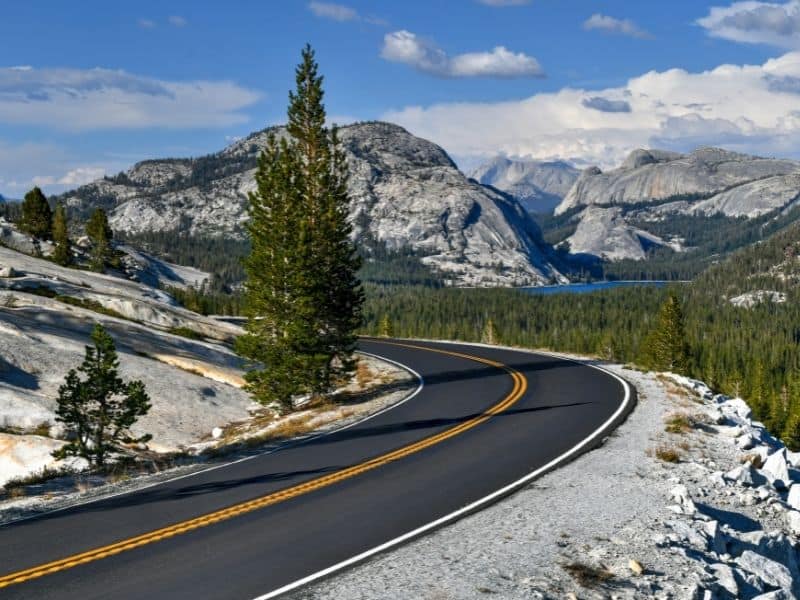
Driving Tioga Pass: 10 Best Stops on Yosemite’s Tioga Road – California Crossroads
This is the one that feels like entering another world. You climb and climb until you’re above 9,000 feet, surrounded by granite domes, alpine lakes, and that thin, sharp high-country air. In early summer there can still be snowfields right beside the road. Tenaya Lake appears like a sapphire dropped into the mountains. Tuolumne Meadows opens up with its wildflower meadows and easy access to backcountry trails.
I once came in this way in late June after a big snow year. The pass had only been open a couple of weeks. Driving past Lembert Dome with the morning light hitting the granite… it’s one of those memories that lives rent-free in my head. Fewer people enter here, so the high country feels more spacious.
Pros: Stunning alpine scenery from the very first mile. Immediate access to Tuolumne Meadows and high-elevation hiking. Usually the shortest lines.
- Cons: Seasonal only (typically opens late May/early June and closes with the first big snows, often November). High elevation—take it slow if you’re sensitive to altitude. Longer drive to Yosemite Valley (about 1–1.5 hours).
- Best for: Summer road-trippers coming from Reno, Mammoth Lakes, or anywhere east. High-country hikers and photographers. Anyone who wants to skip the Valley crowds entirely for a day or two.
- Important: Always check current conditions before heading this way. Tioga Road can close temporarily even in summer due to snow or rockfall.
Hetch Hetchy Entrance – The Quiet Secret
If you want Yosemite without the Yosemite crowds, this is it. The road drops you down to the Hetch Hetchy Reservoir—a granite-walled valley that looks a lot like Yosemite Valley did before the dam. The hikes (especially to Wapama Falls) are excellent, and you’ll often have the trails mostly to yourself.
It’s not the entrance for first-timers chasing Half Dome views, but if you’ve been to the Valley before and want something different, or you just crave peace, it’s magical. I’ve spent whole days here and barely seen another person.
- Pros: Dramatically fewer visitors. Beautiful reservoir hikes with big views. Can feel like your own private park.
- Cons: More remote. You’ll still need to drive inside the park if you want to reach the Valley or sequoias. Limited services nearby.
- Best for: Repeat visitors. Hikers seeking solitude. People who love dramatic but uncrowded landscapes.
So… Which Entrance Should You Use?
Here’s my simple decision guide:
- Coming from Southern California or want giant sequoias first? → South Entrance
- Main goal is Yosemite Valley and you want the shortest drive inside the park? → Arch Rock
- Coming from the Bay Area or want flexibility for Valley + high country? → Big Oak Flat
- Coming from the east or craving alpine scenery and fewer people? → Tioga Pass (summer only)
- Want maximum peace and quiet? → Hetch Hetchy (or enter early via any gate)
Whatever you choose, here are a few hard-won tips:
- Fill your tank in the gateway towns (Groveland, Oakhurst, Lee Vining, or Mariposa/El Portal). Gas inside the park is expensive and limited.
- Download offline maps. Cell service is terrible or nonexistent at the entrances and in much of the park.
- Bring layers. Even in July you can have 40-degree mornings at Tioga Pass and 90-degree afternoons in the Valley.
- Stop at pullouts. The drive is part of the experience.
Yosemite has a way of making you feel small in the best possible way. The entrance you pick is just the opening line of the story. The rest—the granite, the waterfalls, the quiet moments when the crowds thin out—is up to you.
If you’re heading there soon, I’d love to know which entrance you’re leaning toward. Drop a comment or send me a note after your trip. I’m always collecting new stories from that first gate.
Safe travels, and may your first glimpse of Yosemite be everything you hoped for.


